Why have some people in detention been released?
On 8 November 2023, the High Court of Australia held that indefinite immigration detention (i.e. where there is no end point in a person’s detention) is unlawful, and that the Australian Government cannot detain a person if they cannot be removed from Australia in certain circumstances.
As the High Court has not yet published its written reasons, it is unclear how many people in detention are impacted by the decision and must be released. We do not know when the High Court will publish its reasons, however it is unlikely to be this year.
During the High Court hearing, lawyers for the Minister indicated that 92 people in detention would likely be impacted by the decision, and possibly 340 other people may be affected.
As of 18 November 2023, at least 93 people have been released from detention.
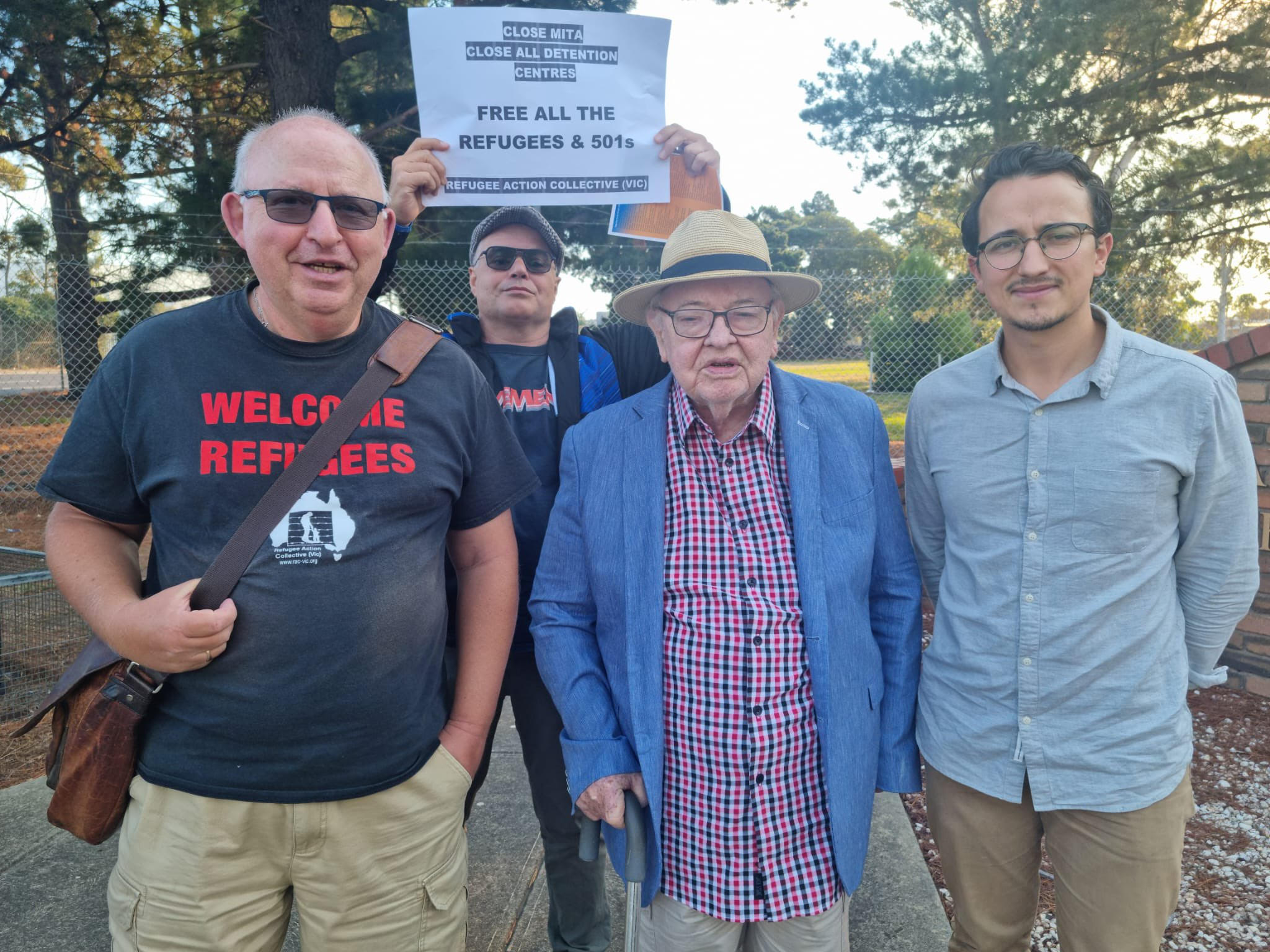
RAC Vic welcomes the High Court decision. We have campaigned for many years for an end to the cruel policy of indefinite detention.
Many, but not all, the people who are being released from detention have committed crimes. It is important to note that they are not being released from prison. They were moved to detention after serving their sentence.
How did the government react?
On 16 November 2023, the government passed a new law that applies to people released from detention because of the High Court decision.
The law says that people released will be granted bridging R visas with additional conditions, including strict reporting requirements.
People will also be subjected to curfew requirements and electronic monitoring devices.
There is a process for people to request the Minister to remove these conditions if the Minister is satisfied that the person is not a risk to the community.
Also, if people have been convicted of certain offences, their bridging visas will have conditions that prevent them being in contact with certain people in the community.
If a person breaches these new bridging R visa conditions, it is a criminal offence, unless the person has a reasonable excuse.
If a person breaches a visa condition over more than 1 day, each day that the person is in breach of the condition will be considered as a separate offence.
The punishment for each offence is a minimum sentence of 1 year of imprisonment and the maximum penalty is up to 5 years’ imprisonment.
RAC Vic believes this is a draconian response that is inherently racist – it applies only to non-citizens.
Citizens who do jail time are released into the community once they serve their sentence, sometimes with conditions.
Non-citizens are being treated as if they are inherently more dangerous. Home Affairs Minister Clare O’Neil responded to the High Court decision by saying that if she had her way, all the people released would be back in detention.
Labor is pandering to racist fearmongering. This is a logical continuation of Labor’s commitment to the Coalition agenda of Operation Sovereign Borders, boat turnbacks, mandatory detention on Nauru and the continued misery for a small number of refugees in Papua New Guinea and 14,000 more in Indonesia.
RAC will continue to campaign against this agenda, for refugees to be welcomed. We will also continue to campaign for non-citizens to be treated equally with citizens in the criminal justice system.
- RAC acknowledges the use of an Asylum Seeker Resource Centre briefing document.